Data-Driven GTM Is No Longer About More Dashboards. It’s About Better Revenue Judgment.
The Number Didn’t Go Away. The Path Did.
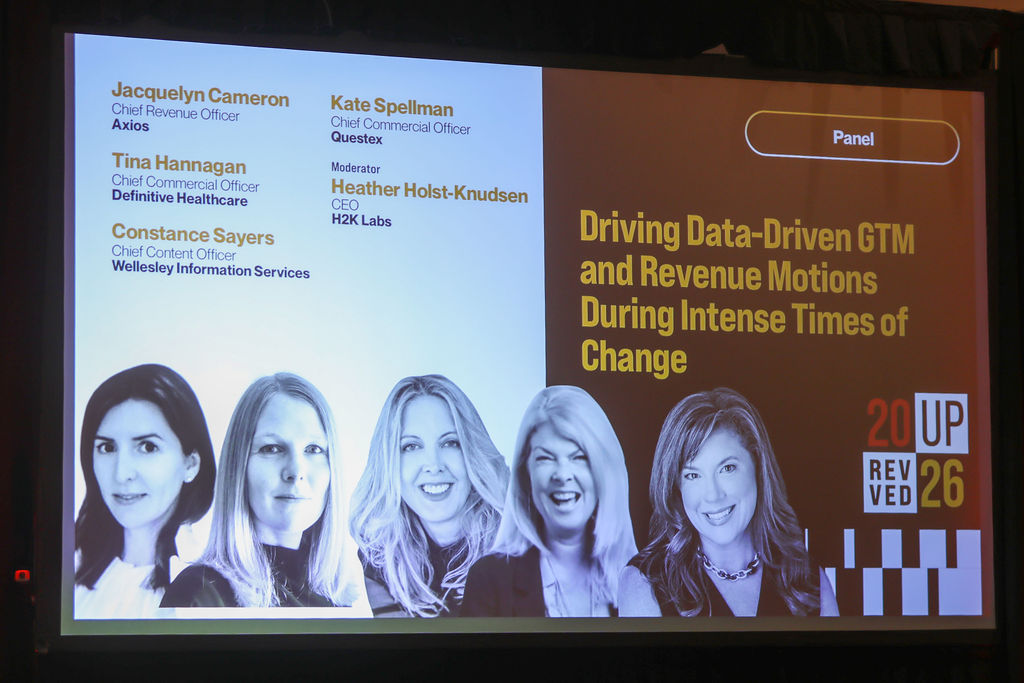
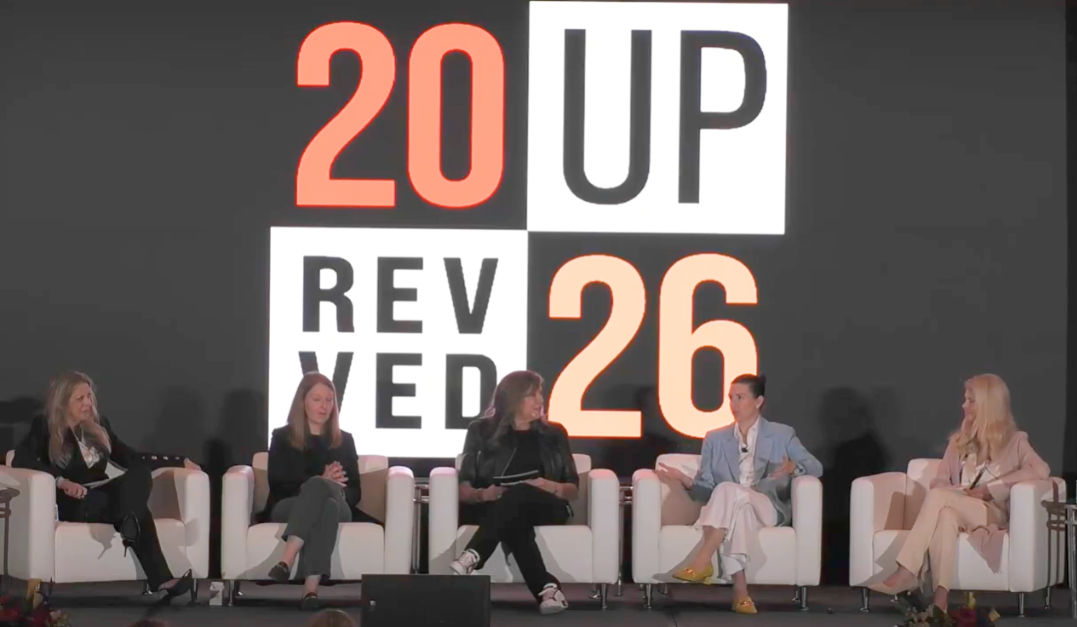
When I moderated our Women of the Revenue Room™ Breakfast conversation at RevvedUP 2026 on driving data-driven GTM and revenue motions during intense market change, I opened with a line that still feels like the right framing:
“The number didn’t go away. The path did.”
That is the job now.
Revenue leadership in 2026 is a contact sport. The funnel is no longer linear. Signals are noisy. Budgets are being audited in real time. AI is raising the bar on speed and precision across sales, marketing, customer success, and product.
To unpack what this means in practice, I was joined by four incredible C-suite operators who sit close to the revenue engine every day:
What emerged was not another AI hype conversation. It was a practical discussion about how revenue leaders are rethinking pipeline, pricing, customer fit, churn, and the human role in GTM.
From Funnel Volume to Signal Quality
Kate Spellman put the shift plainly. Two years ago, revenue teams were still heavily focused on funnel activity. Today, much of that data is either backward-looking or polluted by noise.
Her point: dashboards only matter if they help leaders make decisions now.
For Questex, which operates across events, digital touch points, communities, and multiple verticals, the job is no longer just connecting buyers and sellers once a year. It is building year-round engagement that produces first-party data, deeper customer understanding, and monetizable community value.
That is a major lesson for media and events CEOs. The event is not the product. The event is one high-intensity node in a much larger revenue and data system.
Constance Sayers made a related point. She is spending less time looking at total pipeline and more time looking at deal velocity, time in pipeline, and what has been created in the last seven days.
That is where the boardroom conversation needs to move.
Not: “How big is the pipeline?”
But: “How much of it is real, current, moving, and attached to customers we can actually retain?”
The Mushy Middle Is Where Margin Goes to Die
One of the strongest threads in the discussion was customer fit.
Tina Hannagan described how data businesses are moving away from old monetization models based on seats and volume. Customers now want outcomes. They want to know what problem is being solved and what value is being created.
She gave the warning every CEO, CRO, and CFO should hear:
It’s really hard to say no to business, but that’s bad business that ultimately is gonna cost a lot of money for our company.
Bad-fit revenue is not just a sales problem. It is a margin problem.
It consumes customer success time. It creates product noise. It weakens retention. It inflates support costs. It makes the forecast look better than the business actually is.
Jacquelyn Cameron said Axios has a name for this danger zone: “the mushy middle.”
Her view was refreshingly disciplined. Complexity slows organizations. Focus matters. Every yes is also a no.
Every time that I say yes to a project, I’m ultimately saying no to something.
That is a value creation statement. Private equity owners, public-company boards, and founder CEOs should all recognize it. Durable enterprise value comes from knowing where you have the right to win — and having the discipline to stop feeding the places where you do not.
Churn Is the Signal You Cannot Explain Away
I always come back to churn because churn tells the truth.
During the panel, Constance made the point that if active customers are giving you signals that they are not coming back, you need to know why. And you cannot convince yourself the data is wrong just because the renewal number is uncomfortable.
Kate shared a practical example from Questex. After sending a cross-functional team through a Revenue Room™ bootcamp, the group chose churn as its capstone project. The team came back and built a dashboard that showed where the company was strong — net new and expansion — and where it needed work: lower-level customers at risk of dropping down or leaving. That matters because churn is often disguised. You may keep the logo, but lose spend. You may retain the sponsor, but lose a product line. You may renew the account, but lose strategic relevance.
For CEOs, the question is not only “Did we lose the customer?”
It is: “Where are customers quietly shrinking before the P&L catches up?”
AI Is Repricing the Revenue Model
The best AI question is not, “How do we do the same work faster?”
The better question is, “Which parts of our economic model no longer make sense?”
Tina made this point in the context of pricing. In data and information businesses, advanced analytics and professional services have often been priced around people, hours, and delivery effort. But when customers use AI, and providers embed AI into delivery, that pricing logic breaks down quickly.
Procurement will come for anything priced on labor if AI reduces the labor.
That means leaders need to price around outcomes, scarcity, proprietary data, workflow integration, and defensible expertise. If AI can replicate the input, the price compresses. If AI enhances a unique asset, pricing power improves.
Kate also shared how Questex is using Gong to surface keywords, themes, customer objections, and revenue at risk. That is not just sales enablement. It is product, packaging, and pricing intelligence.
AI-Powered, Human-Led
The panelists were aligned on one thing: AI should collapse low-value work, not remove human judgment.
Jacquelyn said it clearly:
“If it’s rote, the machine should do it.”
She also described the goal as creating “super humans” — revenue teams that use AI to draft, research, summarize, inspect, and accelerate, while humans still own judgment, trust, taste, and action.
Kate shared that Questex is piloting AI SDR motions across inbound and outbound. Early results included inbound meeting conversion moving from 30% to 37%, roughly 2,000 hours saved, and $1 million in pipeline created.
Constance shared that Wellesley Information Services added an AI-driven chat experience to a Las Vegas show that drove about eight registrations per day.
These are the use cases that matter: not AI theater, but measurable GTM leverage.
Metrics + Instrumentation
Revenue leaders should stop asking for more dashboards. Ask for sharper operating signals.
Revenue Growth
Track:
- Pipeline created in the last seven days
- Deal velocity by segment and product
- Expansion pipeline inside existing customers
- AI-assisted meetings, opportunities, and pipeline sourced
- Conversion by event, content, community, inbound, outbound, and partner source
Data sources: CRM, marketing automation, event registration, web analytics, email engagement, call intelligence.
Owner: CRO with RevOps and Marketing Ops.
Profitability Acceleration
Track:
- Gross retention and net revenue retention
- Downgrades, not just logo churn
- Support burden by segment
- Sales and CS hours per dollar retained
- Hours saved through AI-enabled workflows
Data sources: CRM, CS platform, finance system, support tickets, Jira, Asana, product usage data.
Owner: CFO, COO, CRO, and Chief Customer Officer.
Value Creation Improvement
Track:
- ICP win rate versus non-ICP win rate
- Pricing realization by package
- First-party data completeness
- Cross-sell across events, media, data, research, community, and sponsorship
Data sources: CRM, CDP, registration systems, subscription systems, ad server, lead capture, session attendance, content consumption.
Owner: CEO with CRO, CMO, CPO, and CFO.
What Is Data-Driven GTM in 2026?
Data-driven GTM in 2026 means using real-time customer, pipeline, product, engagement, and financial signals to make better revenue decisions across acquisition, conversion, retention, and expansion. For media, events, and data/information companies, it requires connecting first-party data across registration, CRM, content, sponsorship, product usage, community, and customer success systems.
My Takeaway
The winners will not be the companies with the biggest tech stacks.
They will be the companies with the clearest customer fit, the strongest signal loops, the most disciplined resource allocation, and the best human judgment sitting on top of AI-enabled workflows.
That is the new Revenue Room™ CXO operating cadence: fewer vanity metrics, faster decisions, tighter ICP discipline, and a harder line between revenue that looks good and revenue that creates enterprise value.
To go deeper, watch the full RevvedUP 2026 session video here. To join the next CEO conversation, request an invitation to Revenue Room™ Salon: Women Who Accelerate & Lead, October 6, 2026 at The Yale Club NYC. Or better yet, join the conversation with Kate Spellman, Constance Sayers, and Tina Hannagan all year long and become a Revenue Room™ CXO member, the fastest growing professional network for CEOs and revenue-critical CXOs in media, events, and data/information sectors.