We’ve all heard the cliché that "data is the new oil." But for most enterprise organizations, sitting on massive reserves of data is not the problem.
The real challenge, especially in industries like the $40 billion global events sector, is monetization. How do you turn billions of fragmented, siloed interactions into a cohesive engine that actually drives measurable revenue and shareholder value?
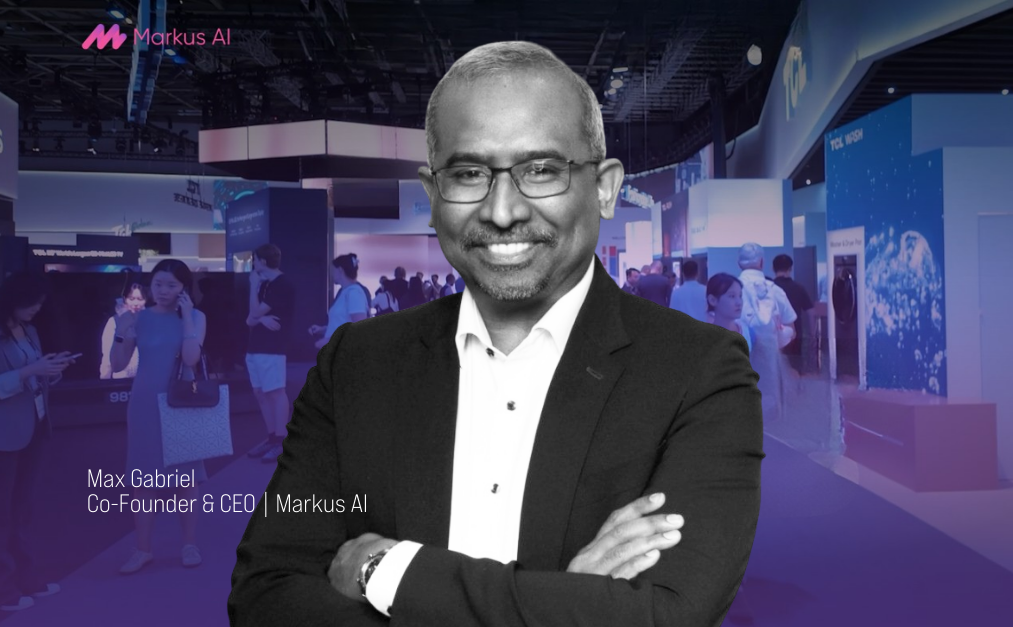
Max Gabriel, former Chief Transformation Officer at Informa and now Co-Founder and CEO of Markus AI, has spent the last decade building the foundations of what he now calls the Agent Economy. Under his leadership, Informa built a monumental B2B data engine, dubbed IIRIS - that ingested over 1.8 billion audience interactions and identified more than 15 million known decision-makers. The lessons from building IIRIS did not end at Informa. They became the foundation for Gabriel’s next venture, Markus AI. Today, Markus AI is applying those same principles to a new generation of AI-driven agents designed to turn enterprise data into real-time commercial action.
For CEOs and CXOs staring down the barrel of costly digital transformations that fail to yield ROI, the playbook for turning a passive data lake into an active revenue stream requires a fundamental shift in both mindset and operational architecture. Here is how to make the leap.
Stop Calling It a "Data Program"
The fastest way to ensure an enterprise-wide data initiative fails is to frame it as a technical IT project. When Gabriel led a massive $300 million transformation at Pfizer, and later at Informa, the initiative was never pitched internally as a "data program". Instead, it was positioned exclusively around improving customer interaction.
By framing data consolidation as a mission to make every customer touchpoint more contextual and personalized, you eliminate departmental friction. Suddenly, marketing, sales, and content teams realize they all have a stake in the outcome, rather than viewing it as a burdensome central mandate shoved onto their brand.
Demonstrate Speed to Value Boards and investors get impatient with massive digital transformations. To keep stakeholders engaged and prove rapid ROI, Gabriel utilized a "1,000-day journey" model with strict 100-day proof points. Instead of promising a grand reveal three years down the line, his team demonstrated incremental value every 100 days. This fast cadence allowed for constant course correction, and by the third cycle, internal brands were practically knocking on the door begging to be onboarded.
Prioritize Real-Time Behavior Over Stale Demographics
Many leaders make the mistake of prioritizing clean, structured demographic data first—relying on forms and surveys. But what a customer told you 60 days ago on a registration form is likely no longer relevant to their buying intent today.
To move quickly, Gabriel's team executed two major architectural breakthroughs:
The Data Lake Dump: Instead of getting bogged down in traditional, rigid Extract, Transform, Load (ETL) processes to make sure every piece of data was perfect upfront, they utilized a data lake to easily capture raw information in one place.
Tracking at Scale: They deployed a custom tracker across 600 websites in a matter of weeks, capturing dynamic, real-time behavioral data at massive scale.
The recency of a customer's interaction is far more valuable than their historical demographic profile. By combining a broad data lake with real-time tracking, you capture the actual intent of your market. These insights are exactly the kind of signals modern AI agents rely on. At Markus AI, Gabriel is now building systems designed to interpret these signals in real time and turn them into automated commercial workflows.
Divorce Governance from Value Creation
In a complex, global enterprise, strict data governance—managing privacy laws, consent, and international sharing rights can easily stifle revenue generation. If the team responsible for compliance is also tasked with commercialization, innovation grinds to a halt.
The solution is separation of powers. Informa established two distinct bodies: a Commercial Council entirely focused on value creation and identifying new revenue channels, and a separate Data Governance Council focused strictly on keeping the company out of compliance trouble. This dual-track approach ensures that commercial teams aren't paralyzed by governance roadblocks, and governance teams aren't pressured into reckless data sharing.
The Next Frontier: Enter the "Agent Economy"
This shift is exactly what Gabriel is building today at Markus AI. Once your data lake is active and driving insights, what comes next? According to Gabriel, the days of the SaaS "Tool Economy"—where we pay endless subscriptions for fragmented apps—are coming to an end. We are now entering the Agent Economy.
Rather than treating AI as just a "topping" to infer insights from a structured database, AI is becoming the core engine capable of processing massive amounts of unstructured data, like meeting summaries and conversational inputs. At Markus AI, Gabriel and his team are deploying what he calls “intelligent agent crews” that automate multi-step workflows and bridge the gap between passive insights and real execution.
For leaders, this signals a massive pivot to a Shifting Financial Model. The traditional, bloated multi-year SaaS subscription is peaking. In the near future, organizations will stop overpaying for software licenses and instead pay for an AI agent's hourly rate, activity, or successful outcomes. This means deploying AI co-collaborators that eliminate digital friction and tie operational costs directly to measurable results.
For Gabriel, Markus AI represents the next chapter of the same mission he began years earlier: transforming data from a passive asset into an active driver of revenue.
Are You Ready to Lead the Disruption?
The transition from passive data lakes to AI-driven agent economies is happening now, and the leaders who move first will capture the market.
Don't let the conversation stop here. Join the top minds in business, including Max Gabriel himself at RevvedUP 2026, happening March 23-24 at The Vinoy in St. Pete, FL. This is the only event where CEOs and revenue-critical teams come together to turn AI disruption and data strategy into measurable growth. Secure your spot and ensure your organization is driving the Agent Economy, not getting left behind by it.