Customer-Centricity
November 17, 2025
Developing Customer Obsession During Times of Accelerated Change
# Customer-Centricity
# Leadership
# B2B
Why Customer Centricity Matters More Than Ever in Fast Changing Markets

Heather Holst-Knudsen
Customer centricity refers to a business strategy that prioritizes the needs, preferences, and experiences of customers at every stage of the business process. This approach involves understanding the customer journey, providing personalized experiences, and ensuring that every aspect of the business aligns with delivering superior value to the customer. A customer-centric organization consistently seeks to create a positive experience before, during, and after the sale to drive repeat business, enhance customer loyalty, and improve overall satisfaction.

Client-centric companies are 60% more profitable compared to companies not focused on the customer." -Deloitte Consulting
Emphasizing customer-centricity is often presented as a universal solution for a company's challenges, yet many only pay lip service to it without taking real action. This term is prevalent in business dialogues and strategic frameworks, but its frequent use has diluted its significance.
To be fair, moving towards a customer-centric strategy where the customer is “the center of everything” isn’t without its risks and problems. This couldn’t be more true for multisided business models.
Benefits of Customer Centricity
Customer-centric organizations enjoy several key advantages, often leading to improved profitability compared to their less customer-focused counterparts. Here are some compelling facts and statistics that highlight the profitability and performance improvements of customer-centric businesses:
Increased Customer Loyalty and Retention:
- According to a study by Bain & Company, companies that excel in customer experience grow revenues 4-8% above their market average.
- Temkin Group found that companies with strong customer experience initiatives have a customer loyalty rate 2.1 times higher than those that lag in customer experience.
Higher Customer Lifetime Value (CLV):
- Research by Deloitte indicates that customer-centric companies are 60% more profitable than companies not focused on the customer.
- Adobe reported that businesses prioritizing the customer experience generate 1.6 times higher CLV than companies that do not.
Improved Customer Satisfaction and Advocacy:
- A PwC study revealed that 73% of people consider customer experience an important factor in purchasing decisions.
- The same study found that customers are willing to pay a premium of up to 16% for excellent customer service.
Enhanced Revenue Growth:
- McKinsey & Company highlighted that improving customer satisfaction can lead to a 2-3% increase in revenue.
- According to Forrester, companies that lead in customer experience outperform laggards in revenue growth by nearly 80%.
Reduction in Customer Churn:
- The Temkin Group found that companies that excel in customer experience have 1.5 times more engaged employees, which correlates with lower customer churn rates.
- According to the Harvard Business Review, increasing customer retention rates by 5% increases profits by 25% to 95%.
Customer Centricity Starts From the Top
Becoming truly customer-centric takes time, skills, grit, and investment. But most importantly, becoming customer-centric requires leadership. It starts from the top.
If your CEO talks a big game about customer-centricity but doesn't visit with customers, attend your events or actively engage with attendees and audience members, I don't think you can say your company is truly customer-centric. That's a very quick litmus test." -Heather Holst-Knudsen
Customer-centricity starts from the top because leadership sets the company's tone, vision, and culture. When executives and senior management prioritize and embody customer-centric principles, it influences the entire organization in several key ways:
- Vision and Strategy: Leaders define the company's strategic direction. Emphasizing customer satisfaction and loyalty aligns the company's goals and objectives with customer needs.
- Resource Allocation: Top management controls the allocation of resources. A customer-centric approach ensures that investments are made in areas that enhance the customer experience, such as customer service, product development, and marketing.
- Cultural Influence: Organizational culture is significantly shaped by the behavior and attitudes of its leaders. When top executives model customer-focused behavior and decision-making, it permeates the company, encouraging all employees to prioritize the customer in their daily activities.
- Accountability: Leaders are responsible for setting performance metrics and holding the organization accountable. By establishing key performance indicators (KPIs) that measure customer satisfaction, loyalty, and engagement, leaders ensure that the entire organization remains focused on delivering value to customers.
- Empowerment: When top management prioritizes customer-centricity, it empowers employees at all levels to make decisions that benefit the customer. This can lead to more innovative solutions and a proactive approach to addressing customer needs and concerns.
- Consistency and Alignment: A top-down approach ensures that all departments and functions within the organization are aligned in their customer-centric efforts. This alignment is crucial for delivering a seamless and consistent customer experience across all touchpoints.
- Change Management: Organizational change often requires strong leadership to drive and sustain it. For a company to successfully transition to a customer-centric model, leaders must champion the change, communicate its importance, and guide the organization through the process.
- Single Source of Customer Truth: Becoming customer-centric requires a deep grasp of the customer, providing valuable insights at each point of their journey. This involves understanding customer interactions across different brand portfolios, channels, divisions, regions, and segments to enhance engagement. You must understand where customers intersect and engage in a multisided business environment.
The Complexity of Building a Customer-Centric Organization in a Multisided Business Model
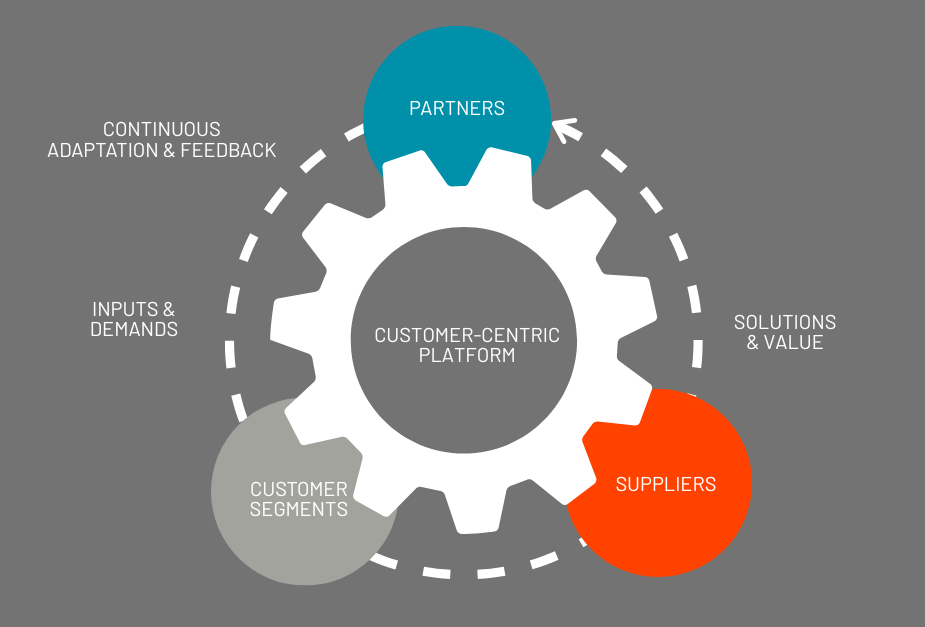
Creating a customer-centric organization is challenging in any context, but it becomes especially complex when dealing with a multisided business model. These models serve multiple interdependent customer segments and require a delicate balance to ensure all parties receive value. In B2B media, events and trade shows, marketplaces, and professional communities, understanding and integrating the diverse needs of buyers and sellers is critical. Leveraging data analytics and insights from customer interactions can significantly enhance this process, leading to a more nuanced understanding of customer needs and preferences.
Top-level Problems
Misinterpretation and Misuse of the Term
The concept of customer-centricity is often misinterpreted and misused. If your CEO or worse yet, your CRO/SVP of Sales, is not meeting with customers and engaging with audience members and attendees you are not truly customer-centric. The words “customer-centricity” become meaningless and the term is dismissed internally.
All Talk, No Action
Many companies claim to be customer-centric, but actions do not follow suit. For example, huge amounts of effort go into collecting survey responses at events and generating NPS scores yet those responses and feedback go unanswered and no one is responsible for actioning critical items requiring attention. And I will go back to point 1: if a customer has a glaring issue, does the CEO personally reach out to discuss how that problem will be resolved? How is data being used to dive deeper into root causes of these issues and to action resolution and track progress?
Overemphasis on one Customer Segment over Another
Yes, you heard me. You can put TOO much emphasis on one segment at the expense of the other. I see this often in media and events. It can be an advertiser-led or audience-led business approach each with its own philosophy. Bring in the dollars, we can get the audience. Bring in the audience, and advertisers and sponsors will come. Unfortunately, it doesn’t quite work that way. There has to be a balance between customer segments to ensure you are responsive to the evolving needs of all sides and also identifying unspoken needs in time to action them.
Misunderstood Complexity and Required Investments
Implementing a true customer-centric strategy is complex and challenging. Being customer-centric requires a data strategy that generates a single source of truth, trusted and meaningful insights, and the ability to action those insights across the organization daily. It requires deep customer understanding, cross-functional alignment and collaboration, new forms of KPIs and compensation, and changes in processes and culture. It’s a marathon, not a race and capabilities are built over time. Without this, you cannot be customer-centric in a sustainable, scalable, and measurable way.
Embracing a customer-centric approach may seem daunting, particularly if you attempt to tackle everything at once without first comprehending your present position compared to your desired future state. Achieving success is about finding the delicate equilibrium between fulfilling customer demands and meeting your business's prerequisites for sustainable competitive edge, enterprise value creation, and delivering on stakeholder expectations.
Understanding Multisided Business Models
A multisided business model involves two or more distinct customer segments whose interactions are facilitated by the platform. The success of such models hinges on effectively meeting the needs of each segment and ensuring their journeys intersect productively. Here’s a look at the complexities and strategies involved in creating a customer-centric organization within three specific B2B contexts.
B2B Media
Different Needs of Buyers and Sellers
Buyers (Readers/Consumers):
Seek intuitive, efficient and relevant access to:
- Relevant, high-quality content
- Personalized content and product recommendations
- Actionable decision-support tools
- Qualified peer-to-peer advisory
- Qualified peer recommendations and reviews
- Trusted industry insights and benchmarking
- Peer-level networking opportunities
- Data and analytics to support decision-making
with like-minded peers and solutions that solve business problems. They need easy access to information, personalized content recommendations, and interactive features that enhance their reading experience.
Sellers (Advertisers/Content Providers): Aim to reach a targeted audience, generate leads, and increase brand visibility. They require effective advertising solutions, detailed audience analytics, and opportunities to engage with their target market through various content formats.
Intersection of Needs
To ensure the business model works, B2B media platforms must align the needs of readers and advertisers. This involves:
Content Quality and Relevance: Delivering top-notch, pertinent content alongside actionable decision-support tools to captivate and retain audience members. This strategy establishes various touchpoints for marketers to connect with the appropriate buying audience precisely when needed.
Personalization: Leveraging first-party data and analytics to provide audience members with personalized content, product and supplier recommendations, and decision-support tools boost engagement and retention. This effectively serves the needs of both marketers and the B2B platform.
Marketing Solutions: Developing data-fueled integrated omnichannel marketing programs that integrate seamlessly with content and decision-support tools, such as native, content adjacent, targeted display and retargeted ads; content marketing; product discovery marketplaces; webinar and podcast marketing; newsletter and email marketing; in-person event marketing; and custom content and research solutions.
Engagement Solutions: Creating impactful platforms for peer-to-peer and buyer-to-seller interactions involves fostering professional networks, facilitating smart matchmaking, curated appointments, mastermind groups, and meetups, and leveraging social media for enhanced engagement and collaboration.
B2B Events and Trade Shows
Different Needs of Buyers and Sellers
• Buyers (Attendees/Hosted Buyers): Look for networking opportunities, educational sessions, and exposure to new products and services. They need efficient scheduling tools, engaging content, and platforms for meaningful interactions.
• Sellers (Exhibitors/Sponsors): Seek to showcase their products or services, generate leads, and build relationships with potential clients. They require visibility, high foot traffic, and tools to manage and follow up on leads.
Intersection of Needs
For B2B events and trade shows, the intersection of needs involves:
• Event Design and Scheduling: Creating an engaging event layout and schedule that maximizes opportunities for interaction between attendees and exhibitors.
• Networking Opportunities: Implementing networking platforms and hosted buyer programs that facilitate meaningful connections.
• Engagement Tools: Providing tools such as event apps, interactive maps, and live polling to enhance attendee engagement and exhibitor visibility.
B2B Marketplaces
Different Needs of Buyers and Sellers
• Buyers (Businesses): Require a wide selection of products or services, competitive pricing, and a seamless purchasing process. They need detailed product information, reviews, and efficient transaction mechanisms.
• Sellers (Suppliers): Aim to reach a broad audience, manage their inventory, and maximize sales. They require robust listing tools, marketing support, and detailed analytics on buyer behavior.
Intersection of Needs
In B2B marketplaces, aligning buyer and seller needs involves:
• Product Listings and Information: Ensuring comprehensive and accurate product listings with detailed information and reviews to help buyers make informed decisions.
• Transaction Efficiency: Streamlining the purchasing process to reduce friction and enhance the buyer experience.
• Marketing and Analytics: Providing sellers with marketing tools and insights derived from buyer data to optimize their sales strategies.
Role of Data Analytics and Customer Insights
Data analytics and customer insights are crucial in understanding and addressing the diverse needs of buyers and sellers in multisided business models. Here’s how they play a critical role:
• Customer Behavior Analysis: Analyzing data on how different customer segments interact with the platform helps identify patterns, preferences, and pain points. This information is essential for tailoring offerings to meet specific needs.
• Personalization: Leveraging data to provide personalized experiences enhances engagement and satisfaction. For example, personalized content recommendations in B2B media, tailored networking opportunities in events, and customized product suggestions in marketplaces.
• Feedback Loops: Implementing mechanisms for collecting and analyzing customer feedback enables continuous improvement. This can include post-event surveys, product reviews, and usage analytics.
• Predictive Analytics: Using predictive analytics to anticipate customer needs and behaviors allows for proactive adjustments to the platform, ensuring it remains relevant and valuable to all segments.
Conclusion
Building a customer-centric organization within a multisided business model requires a deep understanding of the distinct yet interconnected needs of different customer segments. By leveraging data analytics and insights from customer interactions, businesses can create tailored experiences that drive engagement and satisfaction. Whether in B2B media, events and trade shows, or marketplaces, the key to success lies in harmonizing the journeys of buyers and sellers to create a cohesive and value-driven ecosystem.
Your Next Step in Data-Driven Growth
Customer centricity is not achieved through intention alone. It requires capability building, leadership alignment, clear data foundations, and a structured method for understanding where your organization stands today compared to where it must be to compete. This is exactly the foundation of RevvedUP 2026 .
As organizations work to strengthen customer centricity in increasingly complex multisided environments, leadership teams are realizing that data informed selling is no longer optional. It requires a clear understanding of how AI, analytics, and changing customer behavior influence the full revenue lifecycle. These shifts demand tight alignment across sales, marketing, customer success, operations, and the C-Suite to ensure every part of the organization supports a consistent, customer focused strategy. This focus aligns directly with the work led by Heather Holst-Knudsen , CEO of H2K Labs , and Anthea Stratigos , CEO of Outsell Inc. , who bring together two influential leadership communities to advance modern revenue strategy.
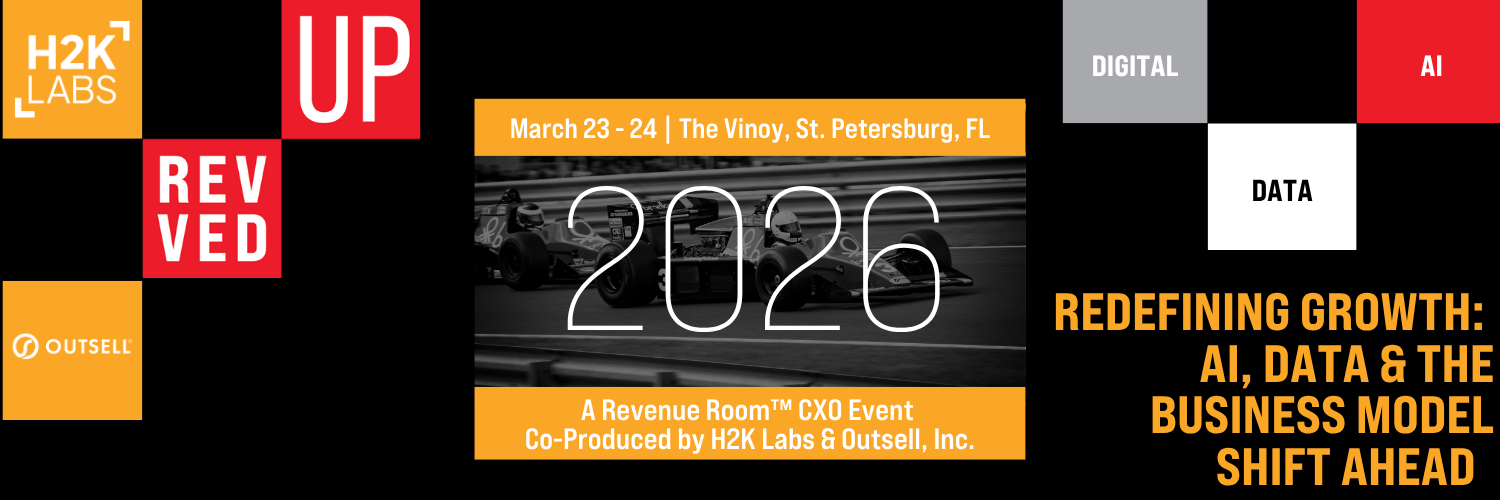
Participants will explore how AI disruption, data convergence, and shifting business models can be leveraged to drive measurable growth and stronger enterprise performance. This event connects insights directly to actionable steps, ensuring leaders leave with practical frameworks to implement immediately.
If your team is working to strengthen data-driven selling, improve forecasting, or align your revenue functions around a unified strategy, RevvedUP 2026 offers the guidance and structure needed to accelerate that progress.
Register now to secure your place and prepare your team for the next stage of revenue performance.
Sign in or Join the community
The Nexus for Data-Driven Growth Leaders

Create an account
The Nexus for Data-Driven Growth Leaders
Like
Comments (0)
Popular

Dive in
Related
Blog
Developing a Single Source of Revenue Truth in Complex Data Environments
By Heather Holst-Knudse... • Aug 7th, 2023 • Views 13
54:44
Video
Be Useful: Patrick Garrigan on Building Events, Media, and Revenue That Last
By Heather Holst-Knudse... • Oct 22nd, 2026 • Views 7
Blog
What is Voice of the Customer (VOC)? Turning Feedback into Action
By Heather Holst-Knudse... • Oct 10th, 2025 • Views 22
Blog
Don't License the Archive. Own the Interface or Meter the Access.
By Heather Holst-Knudse... • Oct 22nd, 2026 • Views 1
Blog
Developing a Single Source of Revenue Truth in Complex Data Environments
By Heather Holst-Knudse... • Aug 7th, 2023 • Views 13
Blog
What is Voice of the Customer (VOC)? Turning Feedback into Action
By Heather Holst-Knudse... • Oct 10th, 2025 • Views 22
Blog
Don't License the Archive. Own the Interface or Meter the Access.
By Heather Holst-Knudse... • Oct 22nd, 2026 • Views 1
54:44
Video
Be Useful: Patrick Garrigan on Building Events, Media, and Revenue That Last
By Heather Holst-Knudse... • Oct 22nd, 2026 • Views 7