
Events
October 12, 2026
When AI Agents Become an Audience, the Media Business Model Changes

# CEO Strategy
# Community building
# Executive leadership
# AI
# Business Transformation
What the CEOs of TIME, Bloomberg Media, Mansueto Ventures, and Hearst Magazines revealed about AI, revenue diversification, direct customer relationships, and the next competitive advantage.

Heather Holst-Knudsen
When AI Agents Become an Audience, the Media Business Model Changes
What the CEOs of TIME , Bloomberg Media, Mansueto Ventures Publisher of Inc and Fast Company , and Hearst Magazines revealed about AI, revenue diversification, direct customer relationships, and the next competitive advantage.
What happens when AI agents visit your website more often than humans?
And, more provocatively, can you sell advertising to them?
At our October 6 Revenue Room™ Salon, Women Who Accelerate & Lead, Jessica Sibley, CEO of TIME, shared that AI-agent traffic had surpassed human traffic on TIME.com. Her team's response wasn't simply to defend its existing business model. It was to experiment with an entirely new one.
TIME developed a Markdown-based version of its website designed specifically for AI agents. When those agents showed significant interest in TIME100 Creators, the company worked with sponsor Ally Bank to develop advertising formatted for that audience.
Jessica described it as TIME's first advertisement created for AI agents.
That is more than an interesting technology experiment. It raises a fundamental commercial question for every CEO in media, events, data, and information services:
If AI changes how people discover, consume, and act on information, where will our businesses create and capture value?
It was one of several consequential conversations at the Yale Club in New York City, where we convened 195 leaders representing 118 companies. Eighty-two percent of attendees were women, and one in four held a CEO or president title.
We came together to celebrate extraordinary female leadership. But the evening was equally focused on what matters most to the future of our industries: building new engines of growth, protecting competitive advantage, and making better decisions amid accelerating change.
I had the privilege of leading a discussion with four executives navigating that transformation firsthand:
- Jessica Sibley, CEO, TIME
- Karen Saltser, CEO, Bloomberg Media
- Stephanie Mehta, CEO and Chief Content Officer, Mansueto Ventures
- Debi Chirichella, President, Hearst Magazines
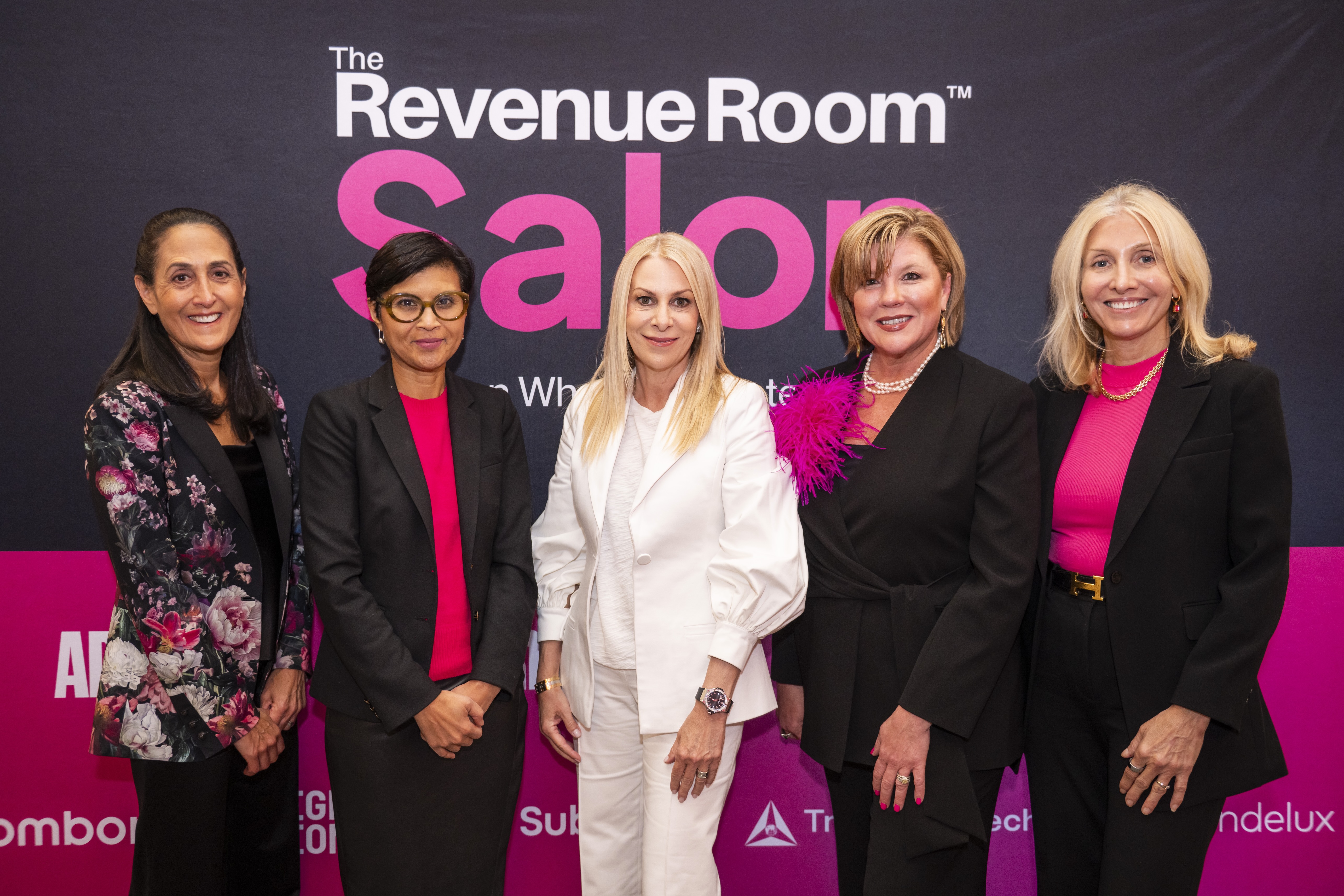
Their companies have different business models and market positions. Yet their experiences point toward a common conclusion.
The next era of growth won't be defined by who produces the most information. It will be defined by who owns the most valuable relationships, experiences, intelligence, and commercial opportunities that follow it.
1. TIME: When the Audience Changes, the Product Must Change
For years, digital publishers have optimized websites for human readers, search engines, and advertisers seeking access to those audiences.
AI agents complicate every part of that equation.
Jessica described a new category of visitor: agents acting on behalf of people to research options, find information, make decisions, and potentially complete transactions.
That creates an important distinction.
Traditional search-driven traffic brings users to a website, where publishers can monetize visits through advertising, subscriptions, commerce, or other products. An AI agent may gather and process information without a person ever viewing the underlying page.
For publishers, that could weaken the connection between content consumption and conventional monetization.
TIME's experiment suggests another possibility: design products and commercial experiences for the agents themselves.
By creating an agent-friendly version of its site and working with Ally Bank on an advertising experiment, TIME is exploring what monetization looks like when the audience isn't necessarily human.
The model is still emerging. Questions around measurement, attribution, advertiser value, and commercial standards remain unresolved.
But the strategic significance is clear.
CEO takeaway: Don't assume that tomorrow's customer journey will resemble today's. Map where AI agents may enter your business, what they need from you, and what value you could provide that cannot be captured through conventional page views alone.
Jessica also described TIME's broader diversification into events, social, branded content, digital products, and AI-related opportunities as the company reduces its dependence on legacy print revenue.
The underlying lesson is not to chase every new technology. It's to recognize when a change in customer behavior demands a change in the commercial model.

2. Bloomberg Media: Recurring Revenue Changes the Economics of Growth
Karen Saltser offered a different example of business model transformation.
Bloomberg Media launched its digital subscription business in 2018. According to Karen, subscriptions now account for approximately 30% of total revenue, with an ambition to exceed 50% in the coming years.
That is a significant strategic shift.
Advertising remains important. Events and sponsorships continue to create opportunity. But a meaningful recurring-revenue business gives a media company something increasingly valuable: a direct economic relationship with its audience.
That relationship changes how the organization can think about customer lifetime value, retention, product development, and long-term investment.
It also makes the business less dependent on any single advertising cycle or distribution platform.
Bloomberg Media hasn't responded by retreating from broad distribution. Karen explained that the company is present across approximately 60 streaming platforms worldwide, alongside newsletters, events, and other channels.
The distinction matters.
Distribution helps a company reach audiences. Direct relationships help it understand, retain, and monetize them.
The strongest models increasingly need both.
Karen also addressed the role of trust as AI changes editorial workflows. AI can help teams process information and work more efficiently, but Bloomberg continues to emphasize human oversight in its publishing process.
For a company whose brand is built on trusted information, credibility is not a supporting feature. It's part of the product.
CEO takeaway: Evaluate how much of your revenue comes from relationships you directly own versus intermediated access. Then assess whether your recurring-revenue products are becoming a material growth engine—or remain peripheral offerings.
Karen also offered a candid leadership lesson. She recalled how two executives on her team once intervened to tell her she needed to rely on them more.
For CEOs managing transformation, that matters. Scaling a business requires more than making good decisions personally. It requires building a leadership team capable of making them together.
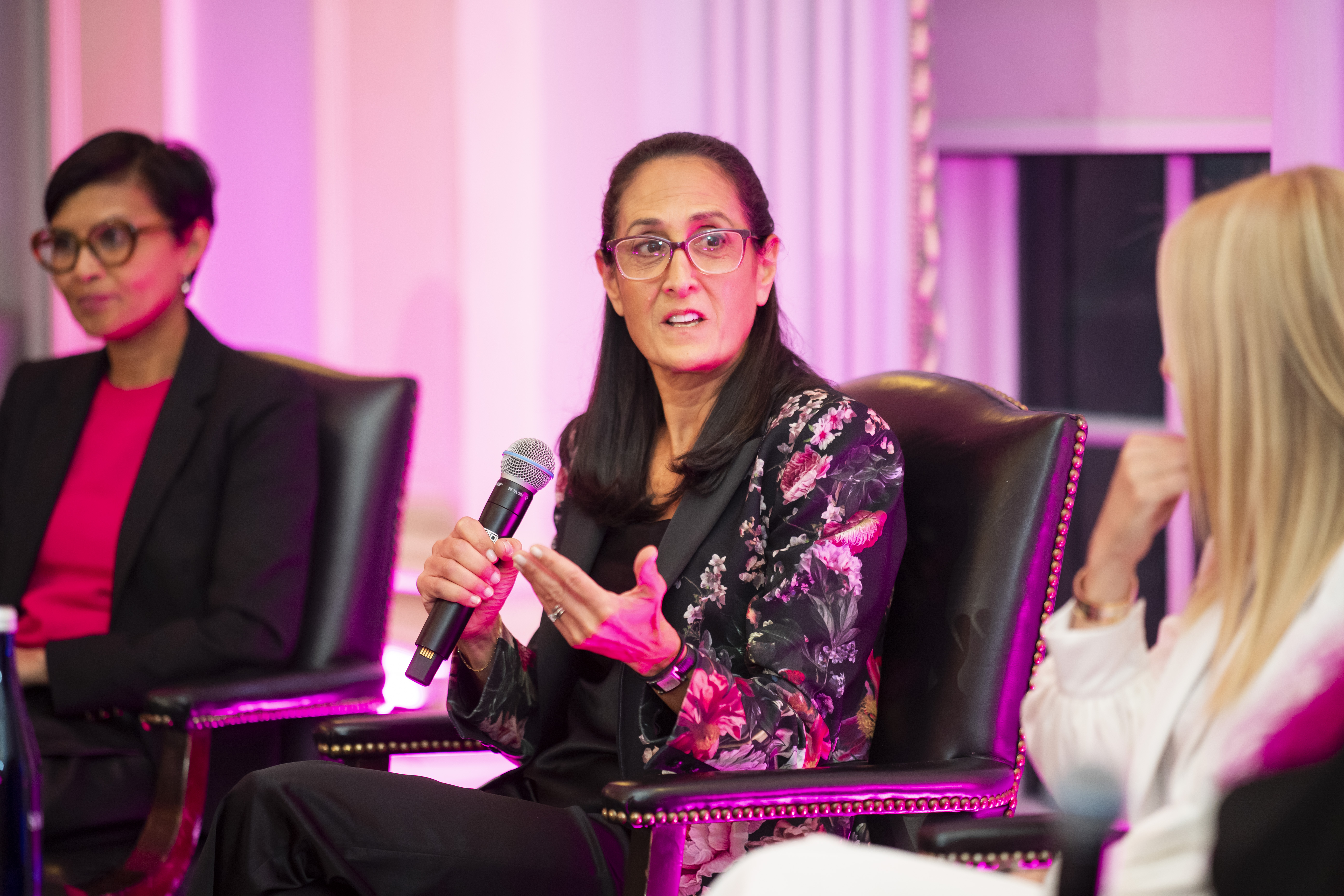
3. Mansueto Ventures: The Opportunity Beyond Content Consumption
Stephanie Mehta challenged another long-standing assumption: that trusted media brands automatically win the attention and loyalty of their intended audiences.
Today, a founder seeking business advice may turn to a social creator as readily as an established publication. Traditional editorial authority does not automatically translate into audience engagement.
That doesn't make trusted journalism less valuable.
It means publishers must become more deliberate about how that value reaches customers—and what customers are willing to pay for.
Stephanie described Mansueto Ventures' shift from a traffic-centered approach toward a reader-first business built on journalism, products, and experiences.
An important part of that evolution is premium executive membership.
Through programs such as the Inc. Leadership Forum and Fast Company executive communities , Mansueto Ventures is bringing selected leaders together around relationships, access, and shared professional interests.
These businesses extend beyond content subscriptions. They create opportunities for members to engage with peers, participate in experiences, and derive value from belonging to a carefully designed professional environment.
That can support direct consumer revenue while creating differentiated sponsorship opportunities.
The broader lesson is highly relevant beyond publishing.
For events businesses, it raises the possibility of moving from episodic attendance to sustained customer relationships.
For information services companies, it creates opportunities to pair proprietary intelligence with decision-making access.
For professional networks, it reinforces the importance of purposeful curation and commercially relevant engagement.
Stephanie also underscored the rising value of proprietary reporting.
When widely available information becomes easier to summarize or reproduce, truly differentiated intelligence becomes more important.
CEO takeaway: Ask whether your business is selling access to content—or helping customers accomplish something valuable because of that content. The second proposition may offer more room for differentiation, pricing power, and sustained engagement.
Memberships are not inherently defensible. Their value depends on the quality of the people, the relevance of the experience, and the outcomes participants can achieve.
That's where thoughtful design and curation become critical.

4. Hearst Magazines: Create New Products Around Emerging Customer Problems
Debi Chirichella brought the conversation directly to the challenge of monetization.
Publishers have spent years building businesses around traffic from Google and social platforms. As those referral patterns change, the economic consequences extend across advertising, audience acquisition, and consumer engagement.
Hearst is responding by strengthening direct audience relationships and developing products that extend beyond traditional publishing.
Debi described initiatives spanning newsletters, memberships, events, video, consumer utilities, and licensing.
One particularly interesting example is Hearst Answer Lab.
As advertisers try to understand how their brands appear in responses from large language models, Hearst is experimenting with ways to apply its content expertise to that emerging need.
The initiative began with six beta advertisers and, according to Debi, expanded as demand developed.
What makes this important isn't simply that Hearst is using AI.
It's that the company has identified a changing advertiser problem and is testing a new commercial product around it.
The same principle is evident in other Hearst initiatives, including the Delish app and new applications of the Good Housekeeping brand's testing and validation expertise through licensing and related products.
Each illustrates a different way to turn existing assets into new forms of customer value.
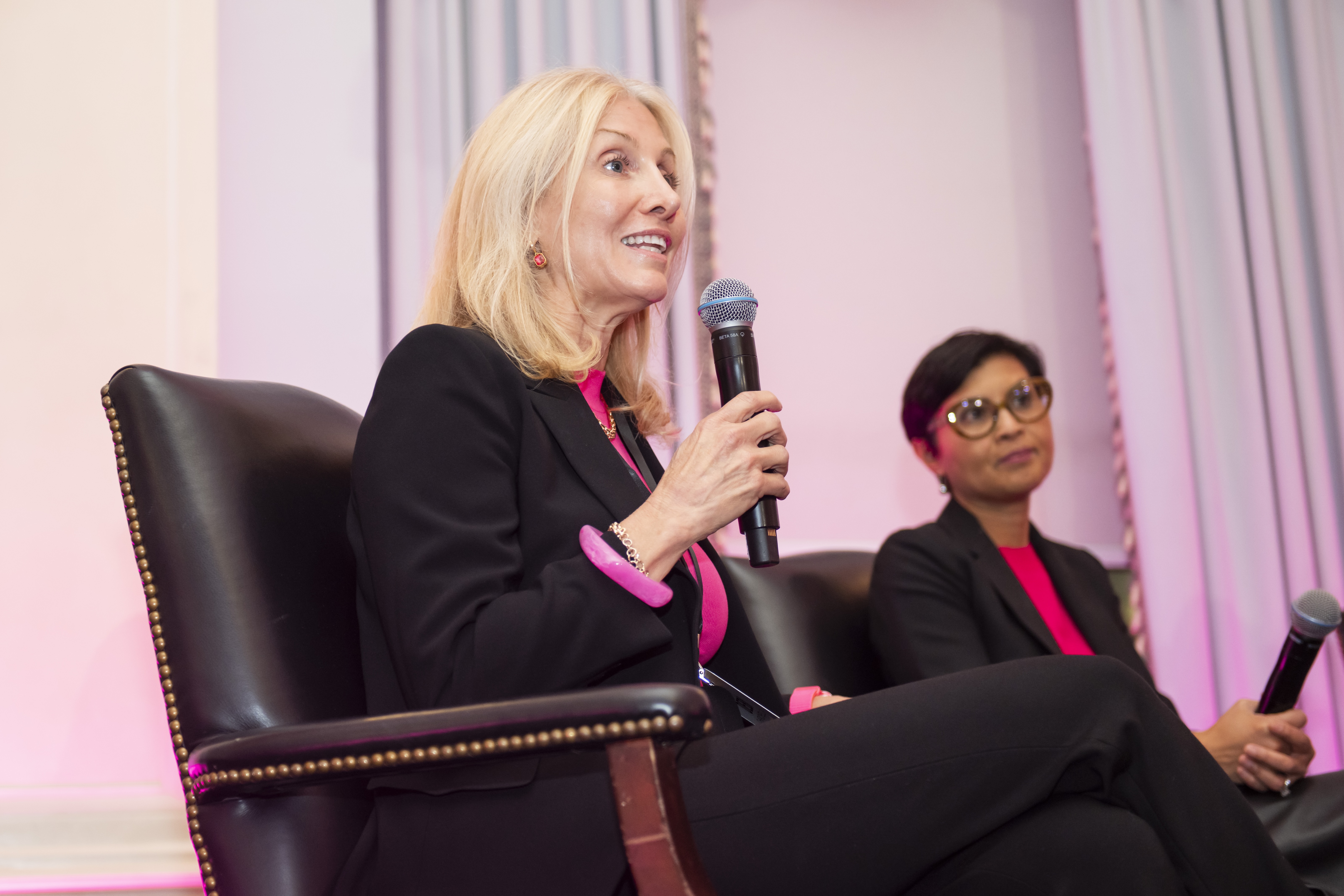
But Debi offered an equally important reminder about execution: leaders need to know when to stop.
Launching an experiment is often the exciting part. Deciding that it is not working—and redirecting people and capital—is much harder.
CEO takeaway: Innovation should be managed as a portfolio of commercial experiments, not an endless series of announcements. Define the customer problem, the economics, the evidence of demand, and the conditions under which you will scale or stop.
The goal isn't to launch more initiatives. It's to find the ones capable of becoming meaningful businesses.
The Bigger Question: Who Owns What Happens After the Answer?
Four companies. Four different approaches.
But each is confronting the same structural change.
For much of the digital era, media businesses have created value by attracting attention to information and monetizing the resulting audience.
AI introduces the possibility that access to information becomes abundant while attention, trust, participation, and proprietary insight become more valuable.
This doesn't mean content is dead.
It means that content alone may no longer be enough to defend a business model.
Consider the examples from the evening:
- TIME is exploring how AI agents could become a new commercial audience.
- Bloomberg Media is scaling direct, recurring customer revenue while maintaining broad distribution.
- Mansueto Ventures is turning trusted editorial brands into premium executive relationships and experiences.
- Hearst Magazines is transforming established expertise into new commercial products for consumers and advertisers.
All four are finding ways to create value beyond the original moment of information consumption.
For CEOs across media, events, data, information services, and professional networks, I believe this leads to three questions worth bringing into the next executive team meeting.
What part of our business is AI making easier to replicate?
Identify the products, services, and customer interactions most exposed to commoditization.
Where are we selling information that customers may increasingly obtain elsewhere? Where might AI change the value of our existing distribution channels?
The answer should influence where you invest—and where you become more cautious.
What can we own that becomes more valuable as information becomes abundant?
It may be proprietary data. It may be a trusted brand, unique access, specialized expertise, a professional network, or the ability to facilitate decisions and transactions.
The most defensible opportunity may emerge from combining several of these assets.
What will we do differently in the next 12 months?
This is where strategy becomes execution.
Which commercial model deserves a serious test? What capabilities must we build? Which experiments should receive more capital? And what should we stop doing to create room for growth?
The answer cannot simply be to add AI to the existing plan.
It requires rethinking where value is created, how it is delivered, and how the business captures an appropriate share.

Celebrating Women Who Turn Leadership Into Measurable Results
The evening wasn't only about how companies are changing. It was also about recognizing the leaders turning those changes into commercial results.
Our 2026 Revenue Room™ Vanguard Awards honored women whose work is creating meaningful impact across executive leadership, revenue, marketing, product innovation, data, and AI.
The awards were grounded in detailed nominations and supporting evidence of business results, reviewed by our judges.
Congratulations to our seven honorees:
- Karen Saltser, Bloomberg Media — CEO Vanguard Award. Recognized for durable growth and diversification, including 6% overall revenue growth in 2025, 10% subscription revenue growth, and 30% growth in live event sponsorship revenue.
- Stephanie Mehta, Mansueto Ventures — Vanguard Lifetime Achievement Award. Honoring a career spanning journalism, editorial leadership, and business transformation.
- Heidi Lorenzen, e.Republic — Marketing Leadership. Recognized for improvements that increased qualified pipeline value per marketing-qualified lead by approximately 30%.
- Izzie Rivers, R-ai Technologies — Product Innovation Leadership. Recognized for bringing an enterprise AI product from concept to commercial deployment, generating approximately £800,000 in recurring revenue within three months.
- Whitney Parker Mitchell, Arizent — Data & AI Leadership. Honored for applying AI to commercial operations and creating a proprietary market intelligence business generating more than $400,000 in recurring revenue.
- Rhiannon James — Best AI Agent. Recognized for an AI-powered inbound sales agent associated with a 55% increase in inbound revenue, 87% growth in new-business revenue, and a six-day reduction in the sales cycle.
- Lauren Palmer — Revenue Leadership. Recognized for 180% regional revenue growth between 2024 and 2026 and a fivefold expansion of her regional client portfolio.
These results are a powerful reminder that innovation only becomes commercially meaningful when leaders turn ideas into execution.

Leadership Is Also About What Happens Behind the Numbers
One of the evening's most memorable moments came when Karen accepted the CEO Vanguard Award.
She shared that just two weeks after being asked to lead Bloomberg Media, she received a breast cancer diagnosis.
Her reflections on navigating those experiences simultaneously, and learning to accept help, brought an important human dimension to a night filled with growth strategies and business performance.
Her remarks were particularly meaningful as we also recognized Tech Day of Pink, the breast cancer research movement founded by Michael Smith.
Karen shared that she is healthy today and encouraged leaders to be bold, seek support, and ask for what they want.
Stephanie's Lifetime Achievement remarks provided another fitting perspective. Having witnessed nearly three decades of transformation in media, from the early internet through today's AI revolution, she reflected on the industry's enduring purpose: helping people understand the world around them.
Technology changes. Business models change. The need for trustworthy information, exceptional leadership, and human connection remains.

Why These Conversations Matter Now
I've been thinking a lot about what made this year's Revenue Room™ Salon: Women Who Accelerate & Lead so special.
Yes, the caliber of leadership on stage was extraordinary. And yes, we heard some fascinating examples of how these companies are reinventing their businesses.
But what I loved most was how real the conversation was.
When I opened the evening, I told our four executives, "This is not a panel."
And I meant it.
I didn't want carefully rehearsed answers or a discussion where everyone agreed with everyone else. I wanted to know what was working, what wasn't, where they were placing their bets, what worried them, and what they were learning along the way.
Jessica, Karen, Stephanie, and Debi delivered exactly that.
They were candid about the challenges facing their businesses. They shared experiments still in progress, decisions that weren't easy, and lessons learned from getting things wrong. They talked about AI, revenue growth, subscriptions, changing customer behavior, and the pressure to keep reinventing businesses that are already successful.
And they were refreshingly honest about leadership itself.
Karen's story about her executive team telling her she needed to rely on them more was a moment I think every CEO could relate to. Her deeply personal reflections on navigating a breast cancer diagnosis while stepping into the CEO role reminded us that there is always more happening behind the numbers than we see.
Debi's comments about the importance of knowing when to stop investing in an idea were equally refreshing. We spend so much time celebrating innovation and new launches. We don't talk nearly enough about the courage it takes to say something isn't working and move on.
And Stephanie's reflections on nearly three decades in media reminded us that, even with everything changing around us, the purpose of our work still matters.
There was humor. There was vulnerability. There were moments when the executives built on one another's ideas. And there was genuine curiosity about how each company was approaching the challenges ahead.
That kind of honesty is incredibly valuable. And it's not something you find in every executive room.
It's also why I care so much about who we bring together at Revenue Room.
As I said in my closing remarks that evening:
"What makes Revenue Room Salon special is not the stage, the dinner, the awards, or even the Saint Laurent bag. It is who is in this room."
We had 180+ leaders from 118 companies at the Yale Club. But the numbers only tell part of the story.
The real value was in the conversations happening around the tables, during dinner, between sessions, and long after the formal program ended.
CEOs exchanging ideas with other CEOs. Leaders making introductions. People being generous with their experience and equally willing to ask for help.
As Barbara Myers, CEO of IMN Solutions, put it afterward:
"What a room to be in."
That meant a great deal to me because it's exactly what we set out to create.
I believe our industries are entering one of the most consequential periods of change we've experienced. AI is challenging long-established business models. Customer expectations are shifting. The economics of how we create and monetize value are being rewritten.
And nobody has all the answers.
I said that on stage, too:
"The problems we are all trying to solve are moving too quickly, and they are too complicated, to solve alone."
I want CEOs and senior executive leaders to have a place where they can speak openly with people who understand the responsibilities of running a business. People who will share what's working, admit what's not, challenge an assumption, make an introduction, or offer a perspective you hadn't considered.
Not just once a year, but throughout the year, with a shared focus on growth and execution.
Because when the right people trust one another enough to have honest conversations, something valuable happens. You leave with more than an interesting idea. You leave thinking differently about a decision you need to make.
And sometimes, one conversation can change the direction of a business.
To Jessica, Karen, Stephanie, and Debi: thank you for your candor, generosity, humor, and willingness to make this a genuine conversation.
To our Vanguard Award honorees and finalists: congratulations on the work you're doing and the example you're setting.
And to our judges, sponsors, partners, team, and everyone who joined us: thank you for helping create such an exceptional evening.
I came away inspired by the women leading change across our industries, energized by the conversations, and more convinced than ever that bringing the right people together matters.
The future of media, events, and information services is being shaped by the decisions leaders are making right now.
What gives me confidence isn't that anyone has figured it all out.
It's that we have extraordinary leaders who are willing to share what they're learning, challenge one another, and help each other get better.
That's the kind of room I want to keep building.
And I hope you'll be part of it.
ABOUT REVENUE ROOM™ CXO
Revenue Room™ CXO is an invite-only executive peer network and year-round decision system for profitable growth. It brings together CEOs, Presidents, C-Suite executives and senior operating leaders from media, events, data/information services, marketplaces, professional networks and other businesses with complex, multi-sided revenue models. Through confidential peer rooms, the Growth Readiness Diagnostic, executive exchanges, and practical operating resources, Revenue Room™ CXO helps leaders pressure-test consequential decisions, strengthen cross-functional execution, and focus management attention on growth, margin, retention, pricing, AI value creation and enterprise value. Revenue Room™ CXO is an H2K Labs company, extending H2K Labs' work at the intersection of revenue transformation, data, AI and enterprise growth.
Dive in
Related
Video
How the Next Audience Is Rewriting the Media Business Model
By Heather Holst-Knudse... • Mar 18th, 2026 • Views 68
Video
The Business of Fandom: Engineering a Media Flywheel That Wins Speaker: Fabricio Drumond
By Fabricio Drumond • Aug 25th, 2026 • Views 2
Blog
How the Next Audience Is Rewriting the Media Business Model
By Heather Holst-Knudse... • Dec 31st, 2025 • Views 108
Blog
AI Is Eating Your Traffic – How Media Companies Can Reclaim Audience and Revenue
By Heather Holst-Knudse... • Aug 14th, 2025 • Views 135
Video
How the Next Audience Is Rewriting the Media Business Model
By Heather Holst-Knudse... • Mar 18th, 2026 • Views 68
Blog
How the Next Audience Is Rewriting the Media Business Model
By Heather Holst-Knudse... • Dec 31st, 2025 • Views 108
Blog
AI Is Eating Your Traffic – How Media Companies Can Reclaim Audience and Revenue
By Heather Holst-Knudse... • Aug 14th, 2025 • Views 135
Video
The Business of Fandom: Engineering a Media Flywheel That Wins Speaker: Fabricio Drumond
By Fabricio Drumond • Aug 25th, 2026 • Views 2