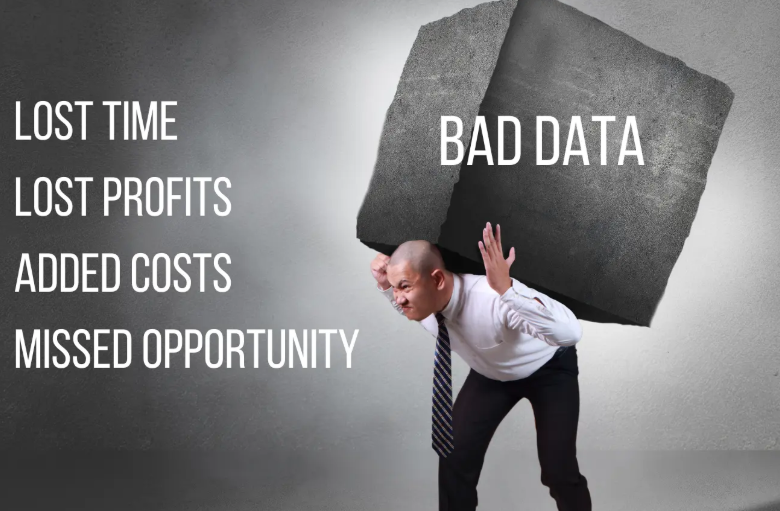
In the fast-paced world of business, the C-suite is often seen as the pinnacle of success.: yet, behind closed doors, many CEOs are grappling with a common enemy: bad data. From decreased earnings per share to a loss of investor trust, the consequences of poor data management ripple through every level of the organization.
According to Gartner:
Poor data quality costs organizations an average of $15 million per year in losses. IBM found that 33% of business leaders do not trust the information they use to make decisions. Inaccurate data can damage a company's reputation, leading to loss of customer trust and loyalty. According to Oracle, 89% of customers will switch to a competitor due to poor data experiences.
CEOs Are Struggling With A Pervasive Issue: Unreliable Data
Why is bad data such a problem?
Bad data can take many different forms. It might be outdated, incomplete, inaccurate, inconsistent, or irrelevant. Regardless of the form it takes, bad data can be devastating for a company's operations. The consequences of bad data include:
Bad decisions: Bad data can cause decision-makers to make poor choices or miss opportunities, which can have serious consequences for a business, leading to lost revenue, wasted resources, or missed opportunities.
Increased risk: Bad data can increase the risk of financial loss, reputational damage, or legal exposure. For example, if a company relies on inaccurate data to make financial decisions, it could face serious financial consequences.
Loss of credibility: If a company's data is consistently inaccurate or incomplete, it can damage the company's reputation and credibility in the marketplace.
Companies have a wealth of information at their disposal; however, not all data is created equal. Bad data can have serious consequences for a business, especially for those in the C-suite. Poor-quality data can directly impact the decision-making process, ultimately costing companies time, resources, and money.
Bad Data Causes Reduced Earnings, Increased Costs, And Lost Opportunities
The impact of bad data on the C-suite
The C-suite is responsible for the strategic direction of a company. They rely on data to make informed decisions and drive the company forward. When bad data is introduced into the decision-making process, it can create significant challenges for leaders in the C-suite.
Specifically, bad data can:
- Create tension: Among C-Suite members with different interpretations of the data.
No one in the C-Suite is immune. Each executive has their own struggle.
The Chief Executive Officer (CEO) feels the pain of decreased earnings per share, lower valuation, and the loss of investor/shareholder trust. The cause? Profit erosion, missed forecasts, and delayed or lowered financial events. Without accurate data to guide decision-making, the CEO is left navigating turbulent waters blindfolded.
For the Chief Financial Officer (CFO), the pain of profit erosion and missed forecasts runs deep. Without visibility into critical metrics like customer acquisition cost (CAC) and unit-level margins, the CFO struggles to accelerate value creation and drive sustainable growth.
The Chief Revenue Officer (CRO) faces the agony of unhealthy revenue, missed quotas, and inconsistent go-to-market solutions. The root cause? A lack of visibility into critical data outside the CRM, missed customer signals, and poorly performing programs.
The Chief Technology Officer (CTO) wrestles with faulty technology solutions, inefficient resource allocation, security risks, and reduced innovation. With this adversity, the CTO cannot properly support the organization.
The Chief Marketing Officer (CMO) grapples with the pain of poor-performing marketing campaigns and missed audience targets. Without proper journey mapping and audience engagement, the CMO struggles to allocate resources efficiently and drive meaningful results.
The Chief Product Officer (CPO) feels the sting of low product engagement and poor buyer-seller engagement. The cause being... Customer needs going unmet, content failing to address demand, and user experiences lacking relevance and personalization.
How to Alleviate C-Suite Pain Points
The Cure for C-Suite Pain
To alleviate the pain felt across the C-suite, organizations must prioritize data quality and management. By investing in robust data analytics tools, implementing data-driven strategies, and fostering a culture of data literacy, businesses can empower their leaders to make informed decisions and drive meaningful outcomes. The road to success begins with good data—and the journey is well worth the effort.
Modern end-to-end data management & analytics platform
There is exciting news for businesses looking to revolutionize their data management and analytics. Introducing a modern end-to-end data management & analytics platform that seamlessly integrates with your workflows: Insightify by H2K Labs. Empower your business users to tackle their most pressing data challenges with ease and efficiency. Say goodbye to data silos and hello to streamlined insights! - Complete 360° view of your business
- Data Warehousing, ETL/Reverse ETL, Machine Learning/AI, Reporting, Analytics, Visualization
- Purpose-built for business users and self-service reporting and dashboard customization
- Fast, bespoke implementation
- Architected for media, events, business information, marketing services, and adjacent SaaS solutions
About the Author
Heather Holst-Knudsen is a distinguished figure and expert in the events, media, marketing and technology sectors. Using her extensive experience, she guides clients in adapting to structural economic and market changes, seizing the chance to innovate and evolve. She specializes in digital and data disruption and opportunity, exploring how these overarching factors can impact revenue growth, customer-centricity, operational efficiency, profit margins, and the overall valuation of companies in both public and private markets. Her journey began at her family business, Thomas Publishing Company, where she honed her skills. She further expanded her expertise by holding positions at early industry giants Miller Freeman, Reed Elsevier, and IDG. Returning to Thomas Publishing, Heather founded and spearheaded Manufacturing Enterprise Communications, an integrated media portfolio connecting buyers and sellers in the manufacturing and technology sectors. Starting in 2015 and spanning the next seven years, she leveraged her expertise as a revenue and business leader in various SaaS businesses, including Feathr, Gleanin, Brella and Edflex.
Heather is deeply passionate about digital innovation, data monetization, and AI and how these strategies fuel revenue growth, profitability, and company valuation. To serve and create value for clients in these areas, she launched H2K Labs , dedicated to generating and leveraging value through data for media, business information, events, and adjacent technology and service markets.