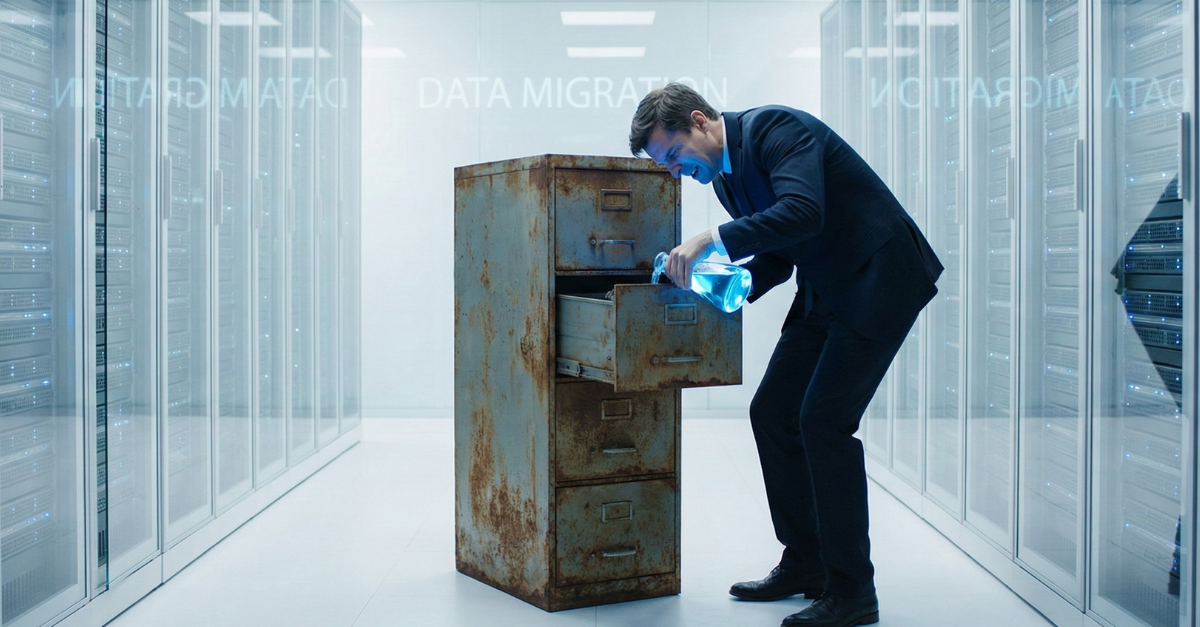
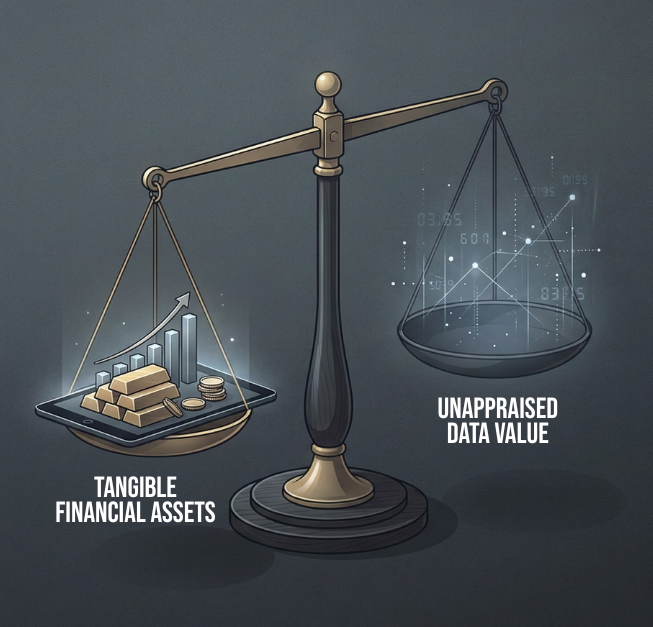
For most leaders, data still lives in one of two mental buckets: risk or reporting. Compliance risk. Privacy risk. Dashboards. KPIs. Something to control, contain, or explain to the board.
That framing is already outdated.
In my conversation with Janice Liu , CEO of The Mantis Group , what became unmistakably clear is this: many companies are sitting on assets that are more valuable than the business they believe they are running. And they are treating those assets like forgotten inventory in a storage closet. Janice has seen it across publishers, banks, retailers, agencies, and global enterprises. The pattern is consistent. Leaders obsess over optimizing the core business while ignoring the latent value embedded in the data their operations produce every day.
WATCH THE FULL EPISODE ON OUR YOUTUBE CHANNEL
Listen to the full episode on Apple , Spotify , or Amazon . From Childhood Conviction to Corporate Valuation
Janice’s instinct for identifying underpriced assets showed up long before boardrooms and balance sheets.
At just ten years old, she noticed a market inefficiency while traveling abroad. By importing rare Beanie Babies and selling them through classified ads back home, she cleared $20,000 in two weeks. No spreadsheets. No formal model. Just a sharp understanding of demand, scarcity, and value transfer.
That same instinct drives her work today.
What changed is the scale.
Instead of collectibles, Janice now helps organizations appraise and activate something far more powerful: their data.
Every Company Is a Data Company (Whether It Admits It or Not)
One of Janice’s most direct statements landed with force:
“Every company is a data company. If you have customers, operations, or content, you are already in the data business.”
Most organizations already possess three foundational data asset classes:
• Customer and interaction data
• Operational and transactional data
• Content and intellectual property
For years, leaders only valued the first two. Content was archived, under-maintained, and treated as historical output rather than strategic input.
Generative AI changed that equation overnight.
Content is no longer dormant. It is trainable. Monetizable. Transferable. And in many cases, irreplaceable.
Why Data Is Often Worth More Than the Core Business
Here is where the conversation gets uncomfortable.
Janice has repeatedly seen data asset valuations exceed the value of a company’s operating business. Not in theory. In live M&A processes.
Why?
Because operating businesses are often capped by margin, labor, and growth constraints. Data assets scale differently. They support new products, new buyers, new markets, and future AI readiness.
Investors understand this.
A services business might trade at four times EBITDA. A technology business at eight to ten. But a company that can credibly demonstrate data readiness and monetization potential can command multiples well north of that.
The data signals future optionality. And optionality drives valuation.
The Appraisal Gap Holding Leaders Back
Despite a global data economy that has existed for decades, most companies have never appraised what they own.
They know their revenue.
They know their margins.
They do not know the value of their data.
Janice’s methodology forces that clarity.
Rather than starting with what the company believes its data is worth, she works backward from market demand. Who would buy it? For what use case? What existing products already generate revenue using similar inputs?
This is not abstract strategy. It is defensible valuation logic used in litigation, M&A, and board-level decision making.
Without it, leaders negotiate blind.
AI Is Exposing the Cost of Neglect
Nearly every CEO now says some version of the same thing: “We need an AI strategy.”
Janice is blunt about why most AI initiatives fail.
The models are not the problem. The data is.
Unstructured content. Incomplete governance. Unclear consent. Poor documentation. AI simply amplifies these weaknesses faster than humans ever could.
She calls them shadow inefficiencies. Hidden operational gaps that only become visible when leaders try to automate or scale intelligence.
AI does not create clarity.
It demands it.
Consent Is the New Competitive Advantage
One of the most important parts of our conversation centered on ethics and trust.
Data monetization without consent is not just risky. It is short-sighted.
Janice sees many companies hesitate to ask customers for explicit opt-in because they fear rejection. In reality, that fear reveals something deeper: uncertainty about the value being delivered in exchange.
Trust, once lost, collapses long-term value. And future buyers of data know this.
Consent, governance, and transparency are no longer compliance checkboxes. They are prerequisites for monetization.
What This Means for Leaders Right Now
The takeaway is not that every company should rush to sell data tomorrow.
It is this: leaders must stop treating data as exhaust and start treating it as inventory.
Strong organizations are already shifting how they operate:
• They inventory and document their data assets
• They appraise value before negotiating access
• They prioritize ethical consent
• They align data strategy with M&A and AI readiness
• They stop leaking value through uncontrolled platforms
This is not a technology problem.
It is a leadership one.
Where the Conversation Continues
The leaders who move first are not chasing trends. They are reframing how enterprise value is built.
That is why these conversations do not end on the podcast.
They continue inside Revenue Room™ CXO and live at RevvedUP 2026 , March 23–24 at The Vinoy in St. Pete, FL, where the future of revenue leadership takes center stage. These are working sessions for CEOs and senior executives who want sharper strategy, stronger operating models, and peers who challenge their thinking. If this conversation changed how you view your so-called “dormant” assets, you belong in a room designed for leaders who understand where value is really headed.